

Lingerie shopping can feel like learning a new language. Briefs, bikinis, bralettes, chemises, exotic sets — the list goes on, and most stores don't bother explaining what any of it actually means. This guide breaks it all down in plain terms, so you know exactly what you're looking at before you buy.
We'll walk through each main style, what it's really for, and where to look if you want more detail on a particular one. If you're new to shopping for lingerie, keep this page handy — it's a good one to come back to.
What Are the Different Types of Lingerie?
There are a few core groups: briefs and bikini-style bottoms, bras (including bralettes and strapless styles), bold or exotic sets, hosiery and bodystockings, chemises and babydolls, and lifestyle pieces like loungewear. Most brands sell these as matching sets, but plenty of pieces stand alone just as well.
Briefs, Bikinis & Everyday Bottoms
These are your everyday lingerie bottoms, and the main thing that separates them is coverage.
-
Briefs sit at or above your natural waist and cover the full back and hips — a comfortable, no-fuss option.
-
Bikini-style bottoms sit a bit lower on the hip and cover a little less, giving more shape without going minimal.
-
Hipsters land somewhere in between, with a shorter leg than a brief but still decent coverage.
Neither style beats the other — it really depends on what you're wearing over the top, and how much coverage feels right for you. Briefs are the easy pick for daily comfort. Bikini-style works better under low-rise clothing.
Here's a quick comparison if you're weighing up coverage:
|
Style |
Coverage Level |
Best For |
|
Briefs |
Full |
Everyday comfort, higher-waisted clothing |
|
Hipster |
Moderate-full |
Casual wear, low-rise jeans |
|
Bikini |
Moderate |
Most outfits, balanced coverage |
|
Cheeky |
Light-moderate |
Avoiding visible lines without going minimal |
|
Thong |
Minimal |
Fitted or sheer clothing |
|
G-string |
Very minimal |
Backless or very fitted styles |
Bras: Where Most Lingerie Starts

Most lingerie sets are built around a bra style, so it's worth knowing the basics.
Balconette bras sit low with a straight cup line, lifting and rounding the bust under fitted tops. Plunge styles have a deep, angled centre front for low necklines. Bralettes skip the wire and lean into comfort over heavy support, while strapless bras use band grip and boning to stay put without straps at all. If you want extra lift, a push-up bra uses padding or gel inserts to do the job. T-shirt bras have smooth, seamless cups that disappear under fitted tops. Longline bras run further down the torso for more coverage and a firmer shape.
These aren't strict boxes, either — a bra can be a balconette and a push-up at once, or a plunge that's also a t-shirt style. The names just describe features, and most bras mix two or three together.
Exotic & Bold Lingerie Sets
"Exotic lingerie" covers styles built to make a statement rather than blend in — strappy harness details, sheer panels, bold colour or texture. You'll usually see lace overlays, mesh, vinyl-look fabric and metal hardware like o-rings and chains, often layered together in one set.
These pieces tend to come out for a specific reason — a date night, an anniversary, or just a confidence boost — rather than everyday wear. Fit matters more here, since straps, cut-outs and harness details all need to land in the right spot to feel comfortable. Our exotic lingerie guide goes into more detail on choosing a bold style and wearing it with confidence.
G-Strings, Thongs & Cheeky Cuts
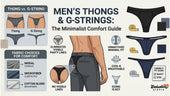
This group covers the most minimal bottoms on the shelf. G-strings have the least coverage — just a thin strip at the back. Thongs are a touch wider than a g-string but still fairly minimal. Cheeky cuts sit between a bikini and a thong, hiding more without leaving visible lines.
They're popular because they avoid panty lines under clothing, though they're not comfortable for everyone. If yours rides up or digs in, that's usually down to fabric or fit rather than the style itself. Our guide on why thongs feel uncomfortable and how to fix it covers the most common causes.
Hosiery, Stockings & Bodystockings
Hosiery is the umbrella term for stockings, tights, hold-ups and bodystockings, and you'll usually see it rated by denier — a number showing how sheer or opaque the fabric is. The lower the number, the sheerer it is. If you've spotted this term on a product page and wondered what it meant, our guide on what denier means on hosiery and tights explains it in full.
Stockings usually pair with a suspender belt or garter. Hold-ups stay up on their own thanks to an elasticated top band. Bodystockings cover the whole torso in one sheer piece, often worn under a top layer or on their own.
Chemises, Babydolls & Slip-Style Sets
Chemises and babydolls both sit in the loose, flowing end of lingerie, and people mix them up constantly. A chemise is usually one continuous piece that skims from bust to thigh. A babydoll has a shaped bust section that flares out looser underneath, typically paired with a separate brief. Both trade the structured shaping of a bra-and-brief set for comfort and a relaxed fit, which is exactly why they suit anyone who finds fitted lingerie a bit restrictive.
Loungewear & Sleepwear (Related, But Not Technically Lingerie)
Loungewear and sleepwear sit next door to lingerie rather than inside it, though the two get shopped together a lot. Loungewear is meant to be worn around the house — or even out — usually as a matching set that still looks put together: think soft co-ord sets, robes and relaxed separates you wouldn't mind answering the door in. Sleepwear and pyjamas are built purely for sleeping, without that same "presentable in public" standard.
If you've ever wondered exactly where the line sits, our piece on the difference between loungewear and pyjamas spells it out. For a full look at fabrics and fits across the category, see our loungewear and sleepwear guide.
Clubwear & Going-Out Styles
Clubwear leans more into lingerie-inspired fashion than lingerie itself — bodysuits, sheer panelling, figure-hugging dresses built to be worn out rather than as an underlayer. It borrows plenty from lingerie (mesh, lace, cut-outs) but is cut like outerwear, so it skips the support features you'd expect from an actual bra or brief. A lot of people layer a longline bra or bodysuit underneath for extra shape.
If you're shopping for a night out and want help picking the right fit, our clubwear and dresses guide covers it properly.
Plus Size Lingerie
Every style above comes in plus sizes, though fit and support quality vary a lot between brands. A well-made plus size piece should offer the same support as its smaller counterpart — not a scaled-up version with weaker construction. Wider bands, reinforced seams and adjustable straps are good signs a brand has actually designed for the size range, rather than stretching a smaller pattern. Our plus size lingerie guide covers what to check for if you're shopping this category for the first time.
Building Your First Lingerie Wardrobe
If you're just starting out, you don't need one of everything on this page straight away. A practical starting point looks something like this:
-
One well-fitted everyday bra in a neutral colour, with matching briefs or bikini bottoms.
-
A t-shirt bra for wearing under fitted or light-coloured tops.
-
A bralette for lounging or low-key days.
-
One bolder piece — exotic, lace, or a chemise — once you know your size and what you like.
From there, add hosiery, clubwear or plus size pieces as you need them. Getting the basics right first makes everything after that easier, since you'll already know your size across bands, cups and bottoms.
Getting Your Size Right
Lingerie sizing shifts more between brands than most other clothing, so it's worth checking the size chart on the actual product page before buying, rather than assuming your usual size carries across. Our bra and lingerie size chart guide shows you how to measure at home, and if you're curious why sizing is so inconsistent between brands in the first place, our guide on how underwear and lingerie sizing actually works explains it.
Caring for Your Lingerie
A lot of lingerie is made from delicate fabrics — lace, mesh, satin — that don't do well in a standard wash cycle. Before you toss a new set in with the rest of the laundry, check our guide on whether lingerie can go in the washing machine so it actually lasts.
Shopping for Him Too?
Building a gift set, or shopping for a partner as well? Men's underwear follows the same basic logic of styles and coverage. Our guide to types of men's underwear covers boxers, trunks, briefs and more, in the same plain terms as this one.
Frequently Asked Questions
What are the main types of lingerie?
Briefs and bikini-style bottoms, bras (including bralettes and strapless styles), bold or exotic sets, hosiery and bodystockings, g-strings and thongs, and chemises or babydolls. Loungewear and sleepwear are worth knowing too, even though they're not technically lingerie.
What's the difference between lingerie and underwear?
Underwear is just the general term for anything worn under clothing. Lingerie is more specific — pieces designed with fashion, occasion or confidence in mind, like matching sets, bold styles, or delicate fabrics such as lace and satin.
What is exotic lingerie?
It's the bolder end of lingerie: think strapping, sheer panels or striking colour, usually chosen for a particular occasion rather than day-to-day wear.
How do I know what size lingerie to buy?
Check the size chart on the actual product page first, since sizing isn't consistent between brands. A general size guide is useful background, not your final answer — and it's worth remeasuring yourself every year or two.
Can lingerie go in the washing machine?
Some pieces can go in on a gentle cycle inside a mesh bag, but delicate lace, mesh and satin usually last longer hand washed. Always check the care label first.
What should a beginner buy first?
A well-fitted everyday bra with a matching brief or bikini bottom, in a comfortable fabric. Once that's sorted, it's much easier to branch out into bolder styles.
What's the difference between a chemise and a babydoll?
A chemise is one continuous, slip-style piece. A babydoll has a shaped bust section that flares out separately, usually with its own brief. Both go for a loose, comfortable fit over structure.
Is clubwear the same as lingerie?
Not quite. Clubwear borrows a lot of lingerie's look — mesh, lace, cut-outs — but it's built as outerwear, meant to be worn out rather than underneath something else.
Once you know the basics, choosing the right piece comes down to comfort and fit rather than guesswork. Explore our lingerie collection to find your next set, or head to our complete women's lingerie style guide for a full look across every category.





 https://seductiveutopiaapac.com/blogs/the-utopia-edit/
댓글 0개