

If you've ever wondered how to measure bra size at home, the good news is you don't need any special tools or a trip to a fitting room. All you need is a soft measuring tape and about five minutes. This guide walks you through the whole process, from your band to your cup, so you can shop online with a lot more confidence. It's one part of the bigger picture we cover in our guide to underwear and lingerie sizing.
What You'll Need for DIY Bra Fitting
DIY bra fitting is easier than most people expect, and you probably already have what you need:
-
A soft, flexible measuring tape (a sewing tape works best)
-
A mirror, so you can check the tape is sitting level
-
A well-fitting, unpadded bra, or no bra at all either works, just avoid anything padded or push-up
-
A pen and paper, or your phone, to write your numbers down
Give yourself a few quiet minutes without rushing. Measuring properly the first time saves a lot of guesswork later.

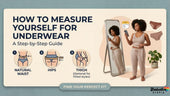
Step 1: How to Measure Your Band Size
Your band size is the number that goes first in your bra size (like the 34 in 34C), and it's the foundation everything else is built on.
-
Stand up straight in a relaxed position.
-
Wrap the tape snugly around your ribcage, directly under your bust, where the band of a bra would sit.
-
Keep the tape level all the way around your body, not angled up or down at the back.
-
Pull it firm but comfortable — snug enough that it won't slide, but not so tight it digs in.
-
Read the number in inches and write it down. If the number is odd, round up to the nearest even number, since most brands only make bras in even band sizes.
This number is your starting point, so it's worth double checking it before moving on.
Step 2: How to Measure Your Bust Size
Next, you'll measure the fullest part of your bust to work out your cup size.
-
Stand relaxed, with the tape sitting flat against your body.
-
Wrap the tape around the fullest part of your bust — usually across your nipple line.
-
Keep the tape level and snug, without pulling it tight or compressing your bust.
-
Read the number and write it down alongside your band number.
If you're wearing a bra while measuring, make sure it's not padded or push-up, since either can add extra inches that throw off your result.

How to Work Out Your Cup Size
Once you've got both numbers, subtract your band measurement from your bust measurement. The difference in inches gives you a rough starting point for your cup size:
-
1 inch difference is roughly an A cup
-
2 inches is roughly a B cup
-
3 inches is roughly a C cup
-
4 inches is roughly a D cup
-
5 inches is roughly a DD cup
This is a commonly used shortcut, but it's not an exact science. It's based on a US-style method, and plenty of brands — especially Australian and European ones — use their own centimeter-based charts instead. Treat this calculation as a helpful starting point, not the final word, and always check it against the specific brand's own size chart before you buy.
Putting It Together: Your Band and Cup Size Measuring Guide
Here's the full band and cup size measuring guide in one place, so you can run through it quickly next time:
-
Measure your band (snug, under your bust).
-
Round to the nearest even number if needed.
-
Measure your bust (relaxed, at the fullest point).
-
Subtract band from bust to estimate your cup.
-
Check both numbers against the specific brand's size chart, since band and cup labelling can shift between brands and countries.
For a full breakdown of how these numbers convert between Australia, the UK, the US, and Europe, our guide on the women's bra size chart covers it in detail.
Common Signs You're Wearing the Wrong Size
Even with a careful measurement, it helps to know what a wrong-size bra actually feels like, since a slightly-off size is very common:
-
The band rides up your back. This usually means the band is too big, or the straps are doing too much of the work.
-
Your bust spills over the top or sides of the cup. This is a classic sign the cup is too small, even if the band feels fine.
-
There's empty, wrinkled fabric in the cup. This usually means the cup is too big for your bust.
-
The center of the bra doesn't sit flat against your chest. This can mean the band or cup size is off, or the style just isn't the right shape for your body.
-
You're constantly adjusting it. A well-fitting bra shouldn't need regular fixing throughout the day.
If a few of these sound familiar, it's worth remeasuring and comparing against the brand's own chart rather than assuming your usual size is still right.
When Should You Remeasure?
Bra size isn't fixed forever. It's worth remeasuring:
-
Once a year, as a general habit
-
After any noticeable weight change
-
If your current bras suddenly feel different, even though nothing else has changed
-
Before buying from a brand you haven't tried before, since sizing varies a lot between brands — something we explain in our guide on why sizes vary between brands
If you've measured properly and you're still struggling to get a comfortable fit, it's often not about your measurement at all — it could be the style or construction. Our fit troubleshooting guide walks through the most common bra fit problems and how to solve them.
A Few Extra Tips for a More Accurate Measurement
A handful of small details can make a real difference to how accurate your numbers end up:
-
Measure a couple of times. If your first and second attempt come out slightly different, take a third and go with the middle number.
-
Keep the tape parallel to the floor. It's easy for the tape to dip lower at the back without you noticing, which can throw off your band number.
-
Breathe normally while measuring. Holding your breath or sucking in changes your measurement, even if just slightly.
-
Try measuring at a similar time if you're comparing numbers later. Small daily changes are normal, so being consistent matters more than picking one "correct" time of day.
-
If you can, ask someone you trust to help. A second pair of hands can make it easier to keep the tape level, though it's completely possible to do this alone with a mirror.
Does Body Shape Change How You Should Measure?
Not really — the steps themselves stay the same regardless of body shape or size. What can change is how the numbers translate into cup size, since the inch-per-cup shortcut becomes less reliable the further your band and bust measurements are from average. If your numbers suggest a very large or very small cup difference, it's worth checking a specialty size chart from a brand that carries a wider range, rather than relying purely on the general calculation above.
Frequently Asked Questions
How do I measure my bra size at home without help?
Follow the band and bust steps above on your own. You don't need a second person. Just make sure the tape stays level all the way around, which a mirror can help you check.
Should I measure with or without a bra on?
Either works. If you do wear one, choose something unpadded and well-fitting, since padding or push-up styles can add extra inches to your bust measurement.
What if my measurements land between two sizes?
Try both nearby sizes if you can. Comparing a couple of options is more reliable than guessing from measurements alone, especially since cup calculation methods vary between brands.
Does this method work for every bra brand?
It's a solid general starting point, but not every brand follows the same sizing formula. Always check your numbers against that specific brand's chart, especially once you're above a DD cup, where systems tend to diverge the most.
How accurate is the inch-per-cup method really?
It's a helpful shortcut, not a guarantee. It works reasonably well for many people, but it's based on a simplified US-style rule, and real fit also depends on your shape, the brand's pattern, and the style of bra. Use it as a starting point, then confirm with the brand's chart.




 https://seductiveutopiaapac.com
0 comments