

Women's lingerie falls into roughly ten broad categories: everyday bras, briefs and thongs, exotic pieces like bodysuits and teddies, corsets and garter sets, hosiery and bodystockings, clubwear, loungewear and sleepwear, plus size and extended ranges, and shapewear (a close cousin rather than lingerie itself). Each category has a distinct purpose, level of coverage and typical fabric, which is what actually separates them once you look past the marketing language.
This guide works through each category in plain terms: what it is, what makes it different from the categories it's most often confused with, and where to look if you want a deeper dive on sizing, fit, or a specific style question. Whether you're building a lingerie drawer from scratch or just trying to work out what separates a teddy from a bodysuit, the goal here is a plain-English reference you can come back to, not a sales pitch dressed up as an explainer.
The Main Categories of Women's Lingerie at a Glance
1. Everyday bras and foundations : the styles worn under clothing daily
2. Briefs, bikinis, thongs and g-strings : everyday and going-out underwear
3. Exotic lingerie : bodysuits, teddies, babydolls and chemises
4. Corsets, bustiers, basques and garter sets : structured, occasion-led pieces
5. Hosiery and bodystockings : legwear and full-body sheer pieces
6. Clubwear and going-out dresses : lingerie-adjacent pieces built to be seen
7. Loungewear and sleepwear : comfort-first pieces for home and rest
8. Plus size and extended ranges : sizing that goes beyond a standard chart
9. Shapewear : smoothing garments often worn under lingerie or clothing
10. Robes and layering pieces : worn over other lingerie categories
Everyday Bras and Foundations
This is the category most people mean when they first think of lingerie: the bras worn under everyday clothing. Within it sits a wide range of styles, contour and t-shirt bras with smooth moulded cups, balconette bras with a lower-cut, straighter neckline, plunge bras for low necklines, and bralettes, which are typically wireless, softer and closer to a soft cotton or lace crop style than a structured bra.

Getting the band and cup right matters more here than in any other category, since a bra worn daily needs to fit properly for hours at a time. If you haven't measured recently, our bra and lingerie size chart walks through the process step by step.
Within everyday bras, construction matters as much as style name. Underwired bras use a thin, curved wire sewn into the base of the cup for lift and shape, while wireless or "soft" bras rely on the fabric and elastic alone, generally more comfortable for extended wear but with less structured lift. Contour and moulded cups use a pre-shaped foam or fabric layer for a smooth line under clothing, while unlined cups show the natural shape of the breast, often preferred under sheer or fitted tops where a moulded seam would show. Push-up styles use padding angled at the bottom and sides of the cup to lift and add cleavage, distinct from a standard padded bra, which adds even coverage without reshaping.
Briefs, Bikinis, Thongs and G-Strings
Underwear coverage runs on a spectrum, and the names describe exactly where each style sits on it. Full briefs offer the most coverage, sitting at or near the natural waist. Bikini briefs sit lower, at or just below the belly button, with moderate back coverage. From there, coverage narrows: a tanga has a V-shaped back with more fabric than a thong but less than a bikini brief.
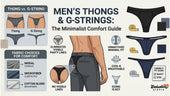
Thongs and g-strings are often used interchangeably, but they're not quite the same thing. A thong has a triangular front panel connecting to a narrow strip of fabric at the back, usually around 2 to 3 centimetres wide, forming a T or V shape. A g-string takes this further: the back is reduced to a single thin string, often no wider than a shoelace, with minimal to no fabric across the back at all. Every g-string is technically a type of thong, but not every thong is a g-string.
A few other everyday styles round out this category. Boyshorts (sometimes called shorts briefs) offer full rear coverage with a straighter leg line, closer in shape to men's underwear than a traditional brief, and are a common choice for sleeping or low-key comfort. High-waisted briefs sit above the natural waist, offering more tummy coverage and a slightly retro silhouette that's become popular again in recent years. Cheeky or hipster styles sit between a full brief and a bikini brief, with moderate rear coverage that shows slightly more than a standard bikini cut without going as minimal as a thong.
If thongs have never felt comfortable no matter what size you try, that's often about the cut rather than the size itself, our FAQ on why thongs feel uncomfortable walks through the most common causes.
Exotic Lingerie: Bodysuits, Teddies, Babydolls and Chemises
"Exotic lingerie" is a broad, slightly old-fashioned retail term that generally covers lingerie designed to be seen rather than worn under clothing, more decorative, often sheer or lace-heavy, and built around a specific occasion rather than daily wear. A few core styles make up most of this category:
-
Bodysuits combine a bra-style top and brief-style bottom into one piece, usually with a structured or moulded cup and a closer, more tailored fit through the body.
-
Teddies are a softer, looser take on the same one-piece idea, typically made from lace, mesh or satin, with a more relaxed fit through the waist and hips than a bodysuit.
-
Babydolls are a short, loose nightgown style with a fitted bust (often a triangle or soft cup) and a flowing skirt that falls anywhere from the navel to mid-thigh, generally made from sheer or lightweight fabrics like chiffon.
-
Chemises are a straighter, more fitted slip style that skims rather than flares, generally longer and closer to the body than a babydoll, and often doubles as both nightwear and a base layer under sheer clothing.

Chemises and babydolls get confused constantly, since both are loose nightgown-style pieces. The clearest distinction is fit and length: a babydoll flares out from a fitted bust and tends to sit shorter, while a chemise hangs straighter from the shoulder or a fitted waist and is usually the longer of the two.
Fabric choice also signals what a piece is built for within this category. Lace and satin lean romantic and are common in babydolls and chemises, mesh and sheer nylon lean bolder and show up more in bodysuits and teddies, and Polish manufacturer Obsessive, a family-run brand exporting to more than 60 countries, builds much of its exotic range around a mix of elastic lace, satin and woven textiles chosen specifically for how they move with the body rather than just how they look on a hanger.
If you want a broader browsable list of styles within this category before committing to one, types of lingerie: briefs, bikinis, exotic sets and more is a faster-scan reference. For guidance on choosing bolder or more daring exotic styles with confidence, from cut and coverage to first-time styling tips, see our exotic lingerie guide.
Corsets, Bustiers, Basques and Garter Sets
This is the most structured end of the lingerie spectrum, and the four terms are frequently used loosely, but each has a distinct construction.
Corset: a stiffened foundation garment, traditionally boned and laced up the back, designed to cinch the waist and shape the torso. Modern fashion corsets usually keep the boning and lacing details for the look, without the intense compression of a historical corset. Bustier: a similar structured, boned top, but generally without the same waist-cinching intent, more focused on bust support and shape than dramatic waist reduction, and often worn as a standalone top rather than purely as an undergarment. Basque: sits between the two, a fitted, boned bodice that extends past the waist to the hips, frequently with garter straps built in. Garter belt (also called a suspender belt in British and Australian English) is separate again: a band worn around the waist or hips with clip-on straps to hold up stockings, usually paired with a bra or bustier rather than built into one piece.
Garter sets are a signature category for several European lingerie manufacturers. Polish brand Axami, manufactured in Bialystok, has built much of its luxury range around structured garter and corset sets using imported Italian, French, Spanish and Swiss fabrics, while Baci Lingerie, a US brand founded in 2010, is known for corset collections alongside its bodystocking range. Obsessive, another Polish manufacturer, tends to favour a softer construction across its corset-adjacent pieces, leaning on elastic lace over rigid boning for a look that references the corset silhouette without the same structural intensity.
Hosiery and Bodystockings
Hosiery covers stockings, tights and pantyhose, and the term that causes the most confusion here is denier. Denier measures the weight of the yarn used, specifically, the weight in grams of 9,000 metres of a single thread, and it's used as shorthand for how sheer or opaque a piece of hosiery will look and feel. As a general guide corroborated across multiple hosiery specialists: 5 to 15 denier is close to invisible on the leg and considered ultra-sheer, 20 to 40 denier is semi-sheer and the most common range for everyday wear, and anything above 40 denier is considered opaque, thicker, warmer and more durable. Our FAQ on what denier means breaks this down further with more specific use cases for each range.
A bodystocking is a related but distinct garment: a one-piece, sheer, close-fitting item that covers the torso and legs (and sometimes arms) in one continuous piece, generally made from the same sheer knit or fishnet material as stockings rather than a lace or satin construction. Baci Lingerie is one brand that specifically built out a bodystocking range alongside its structured pieces, often incorporating mesh panelling and floral lace detail into the one-piece silhouette.
It's also worth separating three terms that get used loosely: stockings are held up separately, either with a garter belt or a silicone grip band at the top (these are sometimes called hold-ups or stay-ups); tights and pantyhose both refer to hosiery that covers the legs and torso in one piece with an integrated waistband, with "pantyhose" more common in American English and "tights" the more common Australian and British term for the same style of garment. A pair of stockings and a pair of tights in the same denier will look similarly sheer or opaque, the denier number describes the yarn, not which of these three garment types it belongs to.
Clubwear and Going-Out Dresses
Clubwear sits at the edge of the lingerie category rather than fully inside it, bodycon dresses, going-out tops and figure-hugging pieces designed to be worn out rather than as an undergarment, but built with similar fabrics (stretch lace, mesh, satin) and similar fit considerations (a supportive built-in shelf bra or structured panel is common). The main difference from other categories on this list is purpose: clubwear is outerwear, sized and fitted the way you'd size a dress rather than a bra. Cut-out details, sheer panelling and strappy backs, all common in this category, borrow directly from exotic lingerie construction, which is part of why clubwear often sits in the same store section as lingerie rather than with general womenswear. For guidance on choosing the right fit and cut for a night out specifically, our clubwear and dresses guide covers this in more depth.
Loungewear and Sleepwear: A Genuine Lifestyle Category
Loungewear and sleepwear get filed under "intimate wear" by habit, but they function completely differently from the rest of this list. Rather than being built for a specific occasion or worn under clothing, loungewear and sleepwear are worn for comfort at home, and the fabric priorities shift accordingly: softness, breathability and ease of movement matter more than structure or sheerness. This spans everything from cotton pyjama sets to slip-style nightgowns, robes and everyday loungewear separates.
The line between "loungewear" and "pyjamas" specifically trips people up, since the two overlap heavily. In general, pyjamas refer to a matching top-and-bottom set intended specifically for sleep, while loungewear is a broader category that includes non-matching, more casual pieces meant for lounging as much as sleeping, think oversized tees, casual shorts, or a robe worn over both. Our FAQ on loungewear versus pyjamas explains the distinction in more detail. For a full breakdown of fabric choices and fit across this category, our loungewear and sleepwear guide covers comfort, fabric and style considerations for every body type.
Robes and Layering Pieces
Robes, kimonos and peignoirs sit outside the categories above, since they're designed to be worn over lingerie or loungewear rather than as a standalone piece. A robe is typically a looser, often towelling or satin outer layer worn after showering or over sleepwear. A peignoir is a lighter, often sheer version of the same idea, closer to a floaty chiffon layer than a practical cover-up, and traditionally worn as part of a matching bridal or occasion lingerie set. Kimono-style robes, borrowed from Japanese dress and now a mainstream western lingerie and loungewear item, sit somewhere between the two, structured with a wrap front and tie waist but usually made from lighter fabrics than a towelling robe. None of these pieces are size-critical the way a bra is, since they're designed to sit loosely over whatever is worn underneath, which makes them one of the more forgiving categories on this list to shop for as a gift.
Plus Size and Extended Sizing
Every category above extends into plus and extended sizing to varying degrees, and it's worth treating as its own consideration rather than an afterthought. Sizing conventions vary significantly by brand: some brands like Dreamgirl, an American label known for costumes as much as lingerie, group extended sizing under labels like "Queen", with size charts that can run to a 48 to 54 inch bust in a single Queen size band, while other brands extend their standard numbered or lettered sizing further up rather than using a separate size label.
Fit considerations also shift at larger sizes, wider bands, reinforced side panels and different underwire shapes all matter more as band and cup size increase. This applies well beyond bras too: exotic pieces like bodysuits and teddies need more structural support built into the design at larger sizes to avoid rolling or digging in, while looser categories like babydolls, robes and loungewear generally scale more forgivingly since they aren't relying on a tailored fit against the body. Our dedicated plus size lingerie guide covers what to look for across every category on this page, from everyday bras through to exotic sets. For the broader question of how and why underwear and lingerie sizing varies so much between brands in the first place, our guide on underwear and lingerie sizing is the deeper resource to work from.
Lingerie and Shapewear: What's the Difference
Shapewear is frequently shelved next to lingerie, and the two are often worn together, but they're built for different jobs. Lingerie's primary purpose is support, coverage or aesthetics; shapewear's primary purpose is smoothing and compression, using a firmer, more engineered fabric construction to hold and shape the body underneath clothing rather than to be seen. A bodysuit and a shapewear bodysuit can look similar at a glance, but the fabric weight and compression level are what actually separates the two categories.
Caring for Different Lingerie Categories
Structured pieces (corsets, basques, anything with boning or an underwire), delicate fabrics (silk, fine lace) and everyday bras all have slightly different care needs, and getting this wrong is one of the fastest ways to shorten the life of a piece you've paid good money for. As a general rule, most everyday bras and briefs can go in the washing machine on a cold, delicate cycle inside a mesh bag, while heavily boned or embellished pieces are safer hand washed. Hosiery and bodystockings are usually the most delicate category of all, a single snag can run the whole piece, so hand washing in cool water and air drying flat is generally the safer default regardless of what the label says. Our FAQ on washing lingerie safely covers the full process, including what to avoid.
Choosing a Brand You Can Trust Across Categories
Once you know which category you're shopping for, brand quality becomes the next variable, and it varies enormously across this space. Some brands specialise in one or two categories: Axami and Obsessive, both Polish manufacturers, lean heavily into structured and exotic pieces, garter sets, corsetry and luxury fabrics sourced from established European textile regions, while Dreamgirl, a US brand founded by Pat Fischer, spans a wider range from everyday lingerie through to costume-driven exotic pieces and plus size ranges under its Queen sizing. Knowing what a brand actually specialises in, rather than assuming every brand does every category equally well, is one of the most useful shortcuts when you're choosing between similar-looking products, a brand known for structured corsetry isn't necessarily the strongest choice for everyday loungewear, and vice versa.
Frequently Asked Questions
What are the main types of women's lingerie?
The main categories are everyday bras and foundations, briefs and thongs, exotic lingerie (bodysuits, teddies, babydolls, chemises), corsets and garter sets, hosiery and bodystockings, clubwear, loungewear and sleepwear, and plus size and extended ranges. Shapewear is closely related but is technically its own category rather than lingerie.
What counts as exotic lingerie?
Exotic lingerie generally refers to lingerie designed to be seen rather than worn under everyday clothing, bodysuits, teddies, babydolls, chemises and similar styles built from sheer, lace or satin fabrics for a specific occasion rather than daily wear. It's a retail category term rather than a strict technical definition, so exactly what's included can vary slightly between stores.
Is loungewear considered lingerie?
Not in the traditional sense, but it's often grouped with lingerie in how stores categorise their intimate apparel. Loungewear and sleepwear are worn for comfort at home rather than under clothing or for a specific occasion, which makes the fabric and fit priorities quite different from the rest of the lingerie category.
What's the difference between a thong and a g-string?
A thong has a triangular front panel connecting to a narrow strip of fabric at the back, while a g-string reduces that back strip to a single thin string with minimal to no fabric coverage. Every g-string is a type of thong, but not every thong qualifies as a g-string.
Do I need to know my exact size before shopping every category?
For bras and structured pieces like corsets and bodysuits, yes, an accurate band and cup measurement makes a real difference to fit and comfort. For looser categories like loungewear, babydolls and robes, sizing is usually closer to standard clothing sizing and slightly more forgiving. Our bra and lingerie size chart is the best starting point either way.
What's the difference between a corset and a bustier?
A corset is traditionally boned and laced up the back, built to cinch the waist as its main function. A bustier is a similarly structured, boned top, but it's generally focused on bust support and shape rather than dramatic waist reduction, and is more often worn as a standalone top. A basque sits between the two, extending further down the hip and often built with garter straps included.
Is a bodystocking the same as tights or pantyhose?
No. Tights and pantyhose cover the legs and lower torso with an integrated waistband, while a bodystocking extends the same sheer, close-fitting construction over the entire torso, and sometimes the arms, as a single continuous piece. Both are usually made from a similar sheer knit fabric, but they're worn differently and serve different purposes.
Once you know which category fits what you're after, the rest of this site is organised the same way, with a dedicated guide or FAQ for nearly every style question covered above. Start with whichever category matches your immediate need, use the links throughout this page to go deeper on fit, sizing or specific style comparisons whenever you need them, and browse our full Lingerie & Underwear Collection when you're ready to shop.




 https://seductiveutopiaapac.com/blogs/the-utopia-edit/
0 comments