

Introduction: The Right Men's Swimwear Changes Everything
The right pair of men's swim trunks does more than cover you at the beach — it determines how you move, how you feel, and how long the piece lasts through salt, chlorine, and sun. Men's swimwear has evolved well beyond the basic board short, and the category now spans performance-engineered competition cuts through to relaxed resort styles built for all-day wear. This guide covers every major style, the fabrics that define quality, and the practical criteria that separate a great purchase from a regrettable one.
Why Your Choice of Swimwear Actually Matters
Swimwear is one of the few garments that must perform across multiple environments simultaneously — water, sun, sand, and movement — while still looking considered. The wrong choice means discomfort in the water, a silhouette that works against your proportions, or a piece that degrades after a single season. The right choice becomes a reliable part of your warm-weather wardrobe for years. Knowing what to look for before you buy is the most efficient way to avoid the common pitfalls.
The Main Styles of Men's Swimwear
Each swimwear style serves a distinct purpose and aesthetic — understanding the differences lets you match the cut to the occasion rather than defaulting to whatever is most familiar.
Swim Trunks
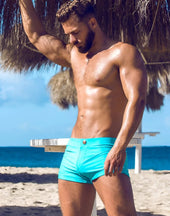
Swim trunks are the most versatile entry in the category: a relaxed, above-the-knee cut with a mesh liner, side pockets, and a drawstring or elastic waistband. They transition easily from water to beach bar without looking out of place. Quick-drying polyester or nylon blends are the standard fabric choice. Browse the full range in our men's swimwear collection to compare cuts and prints across brands.
Board Shorts
Board shorts run longer — typically at or just below the knee — with a flat-front waistband secured by Velcro or a lace tie. Originally engineered for surfing, they prioritise freedom of movement and durability under physical stress. The relaxed silhouette suits taller and leaner frames particularly well. Find dedicated options in our shorts and trunks swimwear range.
Briefs and Bikinis
Minimal coverage, maximum freedom of movement. Brief-cut swimwear — including classic bikini cuts and square-leg styles — is the preferred choice for serious lap swimmers and those who prioritise a clean, European-influenced beach aesthetic. The reduced fabric eliminates drag and dries almost instantly. Explore the full selection in our men's bikinis and briefs swimwear range.
Jammers
Jammers extend from the waist to just above the knee in a compression fit, modelled on cycling shorts. They are the standard choice for competitive pool swimming, where reduced drag and muscle support directly affect performance. Less common as casual beachwear, but increasingly worn by gym swimmers who want coverage without the bulk of trunks.
Enhancing and Structured Cuts
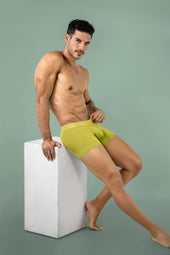
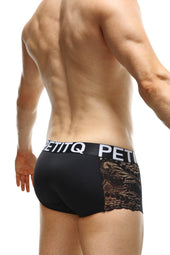
A growing segment of men's swimwear incorporates structured pouches, contour panels, and compression lining designed to enhance the natural silhouette. These pieces prioritise fit engineering as much as fabric, and they reward precise sizing. They sit at the intersection of performance and aesthetics.
Fabric: The Single Most Important Variable
Fabric quality determines how a piece performs in water, how quickly it dries, how long it retains its colour and shape, and how it feels against the skin across a full day of wear.
Polyester
The benchmark fabric for quality swimwear. Polyester resists chlorine degradation, retains colour through repeated UV exposure, and dries rapidly. A high polyester content is the clearest indicator of a piece built to last more than a single season.
Nylon (Polyamide)
Lighter and softer than polyester with a smoother hand feel. Nylon dries quickly and moves well, making it a strong choice for active swimmers. It is slightly less chlorine-resistant than polyester over the long term but remains a premium option.
Elastane / Spandex Blends
Elastane is almost always blended with polyester or nylon rather than used alone. It provides the four-way stretch that allows fitted cuts — briefs, jammers, enhancing styles — to move with the body without restriction. Look for a blend of at least 15–20% elastane in performance-oriented cuts.
How to Choose the Right Pair
Match the Cut to Your Proportions
Shorter or broader frames are generally better served by mid-length trunks that sit above the knee — longer cuts can visually shorten the leg. Taller and leaner builds carry board shorts and longer styles well. Brief cuts work across most body types when sized correctly, as the minimal fabric draws attention to the torso rather than the leg.
Match the Style to the Activity
Lap swimming demands low-drag cuts: briefs or jammers. Surfing and active beach sports call for board shorts with a secure waistband and durable construction. Resort and casual beach days are where swim trunks and relaxed cuts perform best. Buying for a specific use case rather than a vague general purpose produces better results every time.
Size Precisely
Swimwear sizing varies significantly across brands and cuts. Always measure your waist and hips before purchasing and consult the specific brand's size guide. An ill-fitting piece — too loose in the water, too tight at the waistband — undermines both comfort and appearance regardless of how well the design is executed.
Consider Sun Protection
UPF-rated swimwear provides measurable protection against UV radiation during extended outdoor sessions. If you spend long hours at the beach or on the water, UPF fabric is a practical specification worth prioritising, particularly in the Australian sun.
Caring for Your Swimwear
Proper care is the most cost-effective way to extend the life of quality swimwear. Rinse thoroughly in fresh water immediately after swimming — chlorine and salt are the primary causes of elastic degradation and colour fade. Hand wash with a mild detergent rather than machine washing where possible. Never wring the fabric; press gently to remove excess water and lay flat or hang to dry in the shade. Avoid tumble drying entirely, as heat destroys elastane fibres and distorts the structure of fitted cuts.
Current Trends Worth Knowing
- Bold tropical and geometric prints remain dominant for resort and casual beach styles.
- Neutral palettes — stone, navy, olive, black — are the reliable choice for those who prefer a quieter aesthetic that photographs well across multiple settings.
- Shorter inseams on trunks are gaining ground, reflecting a broader shift toward European-influenced proportions in men's swimwear.
- Recycled and sustainable fabrics are increasingly available at the premium end of the market, with performance characteristics that match or exceed virgin synthetics.
Conclusion: Buy Once, Buy Right
The most useful men's swimwear purchase is the one that matches your actual use case, fits your proportions correctly, and is built from fabric that will hold up across a full season of use. Start with the cut that suits your primary activity, verify the sizing against the brand's guide, and prioritise polyester or nylon blends for longevity. Explore the complete range in our men's swimwear collection, or read our broader men's fashion and accessories guide for styling context beyond the beach. The right pair is a straightforward decision once you know what you are actually looking for.



 https://seductiveutopiaapac.com/blogs/the-utopia-edit/
0 comments