

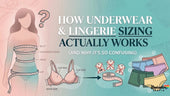
Ever ordered a Medium from overseas and had it show up way too small (or way too big)? You're not imagining things. Underwear sizing changes depending on which country a brand is designing for, so the same body can end up being a Small in one place and a Large in another. That's exactly why a men's underwear size chart is so useful — once you know how the conversion actually works, it stops being confusing. It's part of a bigger picture we cover in our guide to underwear and lingerie sizing.
What's the Quickest Way to Convert Men's Underwear Sizes?
The simplest fix is to stop thinking in letters (S, M, L) and start thinking in centimeter or inches. Almost every brand builds its sizing around waist measurement first, then translates that into a label. So if you measure your waist and match it against a conversion chart, you'll get a far more accurate size than guessing from the label alone.

Why Isn't There Just One Global Size Chart?
Because no single organization ever set the rules — each region just did its own thing over time. Here's roughly how it shakes out:
-
Australia & New Zealand – mostly S/M/L/XL, based on waist ranges
-
UK – usually lines up closely with AU/NZ, though some brands use waist inches directly
-
US – often sized by actual waist inches (28", 30", 32"...), though multipacks lean on letters
-
Europe – uses a number based on half your waist in centimeter, so a 90cm waist becomes a EU 50
None of these systems talk to each other. So the same pair of underwear can carry four completely different labels depending on where it was made for — which is exactly why brand sizing varies so much even when your body hasn't changed at all.
Men's Underwear Size Conversion Chart
Your waist measurement is the one number that stays consistent no matter which country's chart you're reading.
|
Waist (cm) |
Waist (in) |
AU/NZ |
UK |
US |
EU |
|
71–76 |
28–30 |
S |
S |
28–30 |
44–46 |
|
76–81 |
30–32 |
S/M |
S/M |
30–32 |
46–48 |
|
81–86 |
32–34 |
M |
M |
32–34 |
48–50 |
|
86–91 |
34–36 |
M/L |
M/L |
34–36 |
50–52 |
|
91–96 |
36–38 |
L |
L |
36–38 |
52–54 |
|
96–101 |
38–40 |
L/XL |
L/XL |
38–40 |
54–56 |
|
101–106 |
40–42 |
XL |
XL |
40–42 |
56–58 |
|
106–111 |
42–44 |
XXL |
XXL |
42–44 |
58–60 |
A quick heads-up: these ranges are a solid starting point, but individual brands can shift a boundary by a centimeters or two. If it's your first order from a new brand, it's always worth double-checking their own chart before you buy.
How to Measure Your Waist Properly
This bit matters more than remembering "what size you usually are," because your usual size is really just one brand's opinion.
-
Grab a soft measuring tape — not a stiff one.
-
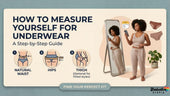
Wrap it around your natural waist, around navel height, not down at your hips or where your jeans sit.
-
Keep it snug but not tight. You should be able to slip a finger underneath.
-
Measure standing relaxed, over bare skin or thin clothing — don't suck your stomach in.
-
Write down both cm and inches so you're covered whichever chart you're checking.
Want the full version, including hips and thighs (handy for boxer briefs and trunks)? Check our guide on how to measure yourself for underwear.
Does the Style Change the Size?
Yes, quite a bit actually. Your waist number is the starting point, but the cut of the underwear changes how that number translates to fit:
-
Briefs and hipsters stick closest to your actual waist measurement — usually the safest bet across brands
-
Boxer briefs and trunks also factor in thigh size, so you can nail the waist and still feel it's tight through the leg
-
Loose boxers are cut roomier, so a lot of people size down here for a closer fit
If a particular style keeps running small or big no matter what you order, it's probably not your measuring — it's just how that brand cuts that style. Our fit troubleshooting guide walks through the most common versions of this and how to fix them.
Does Fabric Actually Affect Sizing?
More than people expect. Two pairs can share the exact same waist measurement on the tag and still wear completely differently depending on the fabric:
-
Cotton and cotton blends hold their shape but don't stretch much, so getting your measurement right matters more here
-
Modal and bamboo blends have a softer stretch, which is why some brands cut these a touch closer without it feeling tight
-
Elastane-heavy fabrics (think performance or athletic underwear) have the most give — you can often size down a notch
Most product pages list the fabric right next to the size chart, so it's worth glancing at both before you decide.
One more thing: cotton can shrink a little after a few washes, especially in hot water or the dryer. If you're torn between two sizes and you wash on warm regularly, sizing up slightly can save you the hassle later.
What About Multipacks?
Multipacks are the easy, everyday buy — and they tend to run pretty true to a brand's own size chart, since they're made to one consistent spec rather than varying style-by-style like premium single items sometimes do. If a brand has fit you well before, a multipack in the same size is usually a safe bet. First time buying from that brand? Grab a single pair first to confirm the fit before you commit to a whole pack.
Common Mistakes People Make When Converting Sizes
A few small errors trip up a lot of shoppers, and they're easy to avoid once you know what to look for:
-
Measuring over jeans or with the tape too loose. This usually adds a couple of centimeters and pushes you into the wrong size bracket entirely.
-
Assuming letter sizes mean the same thing everywhere. A Medium in one country's chart isn't automatically a Medium somewhere else — always check the actual waist range behind the letter, not just the letter itself.
-
Going by height and weight instead of waist. Height-weight charts (sometimes used on generic sizing guides) are a rough proxy at best. Your waist measurement will always be more accurate for underwear specifically.
-
Ignoring the brand's own chart in favour of a general conversion table. General charts like the one above are a great starting point, but if the brand publishes its own measurements, that's the one to trust — it accounts for how that particular brand actually cuts its garments.
-
Not accounting for the style. As covered above, briefs, trunks, and boxers don't all fit the same way even at an identical waist size, so treating every style as interchangeable is a common source of disappointment.
Slowing down for the extra minute it takes to measure properly and cross-check the specific brand's chart will save you far more time (and returns) in the long run.
Buying Underwear as a Gift
If you're buying for someone else — a partner, a family member, or a friend — sizing gets trickier because you can't always ask outright or take a measurement yourself. A few practical workarounds:
-
Check their current drawer. If you have the chance, a quick peek at the size label on something they already wear and like is the most reliable shortcut.
-
Go up a size if you're unsure. Underwear that's a touch loose is far more wearable and comfortable than underwear that's too tight, and most retailers offer easy exchanges for exactly this reason.
-
Stick to familiar, well-reviewed styles. Save the adventurous cuts or unusual fabrics for later once you know their preferences — a classic brief or boxer brief in a mid-range size is the safest gifting bet.
-
Keep the receipt or gift note handy. A gift receipt makes it painless for them to size up or down if needed, without any awkwardness.
Frequently Asked Questions
Is underwear sizing the same as jeans or trouser sizing?
Not quite. Both are based on waist measurement, but trousers build in extra room for movement and layering, so your underwear size and your jeans size won't always be the same number — even though they're measuring the same thing.
What if I'm right between two sizes?
Go up for everyday comfort, or down if you like a firmer, more supportive fit. Genuinely just personal preference here, not a hard rule.
Do these conversion charts work for every brand?
They're a great general guide, but not gospel. Smaller or newer labels sometimes drift from the regional norm another reason it's worth checking why sizes vary between brands even within the same country.
How often should I re-measure myself?
Bodies change, so it's worth doing once a year, or any time a size that used to fit well suddenly feels off.
I'm in Australia and the brand only shows US sizes — now what?
Use the men's underwear size chart international table above to convert your AU/NZ size (or better yet, your raw waist measurement) across to the US equivalent. Don't assume it's a straight letter-for-letter swap — a proper US to AU underwear size conversion always starts from your actual measurement in cm or inches, no matter whose chart you're reading.



 https://seductiveutopiaapac.com
0 comments